Pavilion vs. Pergola for a Pool Area: Which Structure Is Better for Shade and Entertaining?
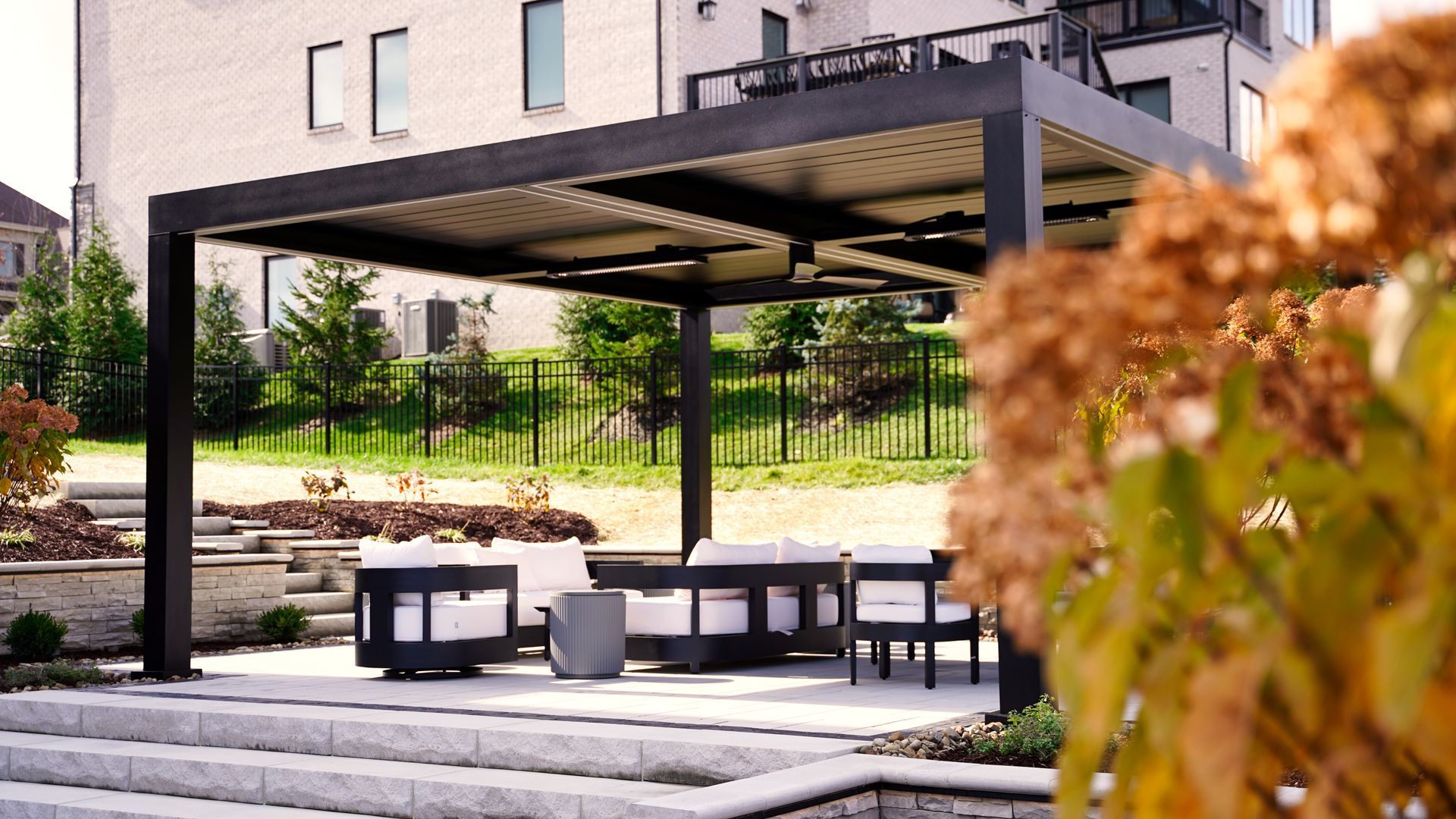
Adding a covered structure near your pool can make the surrounding patio more comfortable and give people a dedicated place to relax, eat, and gather. The harder part is deciding which type of structure fits how you plan to use the space.
For many homeowners, that decision comes down to a pavilion or a pergola.
Both structures can add shade and help define a poolside living area, but they create noticeably different experiences. A pavilion typically provides consistent overhead coverage with a fixed roof. A pergola creates a more open environment, with either traditional slats or adjustable louvers controlling the amount of sun and shelter below.
The short answer: A pavilion is usually the stronger choice when you want dependable shade, covered dining, outdoor cooking, and a protected entertaining area. A pergola is often better when you want a lighter, more open structure and greater control over how much sun reaches the patio.
Modern louvered pergolas can narrow that gap by letting homeowners switch between sunshine, filtered shade, and greater weather protection.
The right choice ultimately depends on how the structure fits your pool, patio, home, and entertaining habits.
Pavilion vs. Pergola: What Is the Main Difference?
When planning a pool area, the biggest difference is the overhead structure.
A pavilion is an open-sided outdoor structure with a solid roof. That roof provides consistent shade and shelter. Pavilions are commonly designed around lounge furniture, dining tables, outdoor kitchens, bars, televisions, lighting, ceiling fans, and other features associated with a defined outdoor living room.
A pergola uses an overhead framework rather than a traditional fixed roof. Traditional pergolas use open rafters or slats that allow some sunlight to pass through. Modern louvered pergolas offer more flexibility because their adjustable louvers can be opened, angled, or closed depending on the conditions.
This distinction affects nearly every other decision, including shade, rain protection, furniture placement, dining, lighting, and the pool area's visual character.
Pavilion vs. Pergola: A Quick Comparison
Before looking at each factor in more detail, it helps to compare how pavilions and pergolas typically function around a pool.
For consistent shade: A pavilion provides dependable overhead coverage because it has a fixed roof. A traditional pergola provides partial or filtered shade, while a louvered pergola lets homeowners adjust how much sunlight reaches the space below.
For an open-air feeling: A pergola generally feels more open because its overhead design maintains a stronger connection to the sky. A pavilion creates a more defined, room-like gathering area while still keeping the sides open to the surrounding pool and landscape.
For rain protection: A pavilion provides consistent overhead shelter from rain, although wind-driven rain can still enter from the sides. Traditional pergolas offer limited rain protection, while some louvered pergolas can close for greater coverage.
For outdoor dining: Both structures can work well for poolside dining. A pavilion is especially useful when homeowners want a permanently covered dining area, while a pergola may appeal to those who prefer a more open setting or adjustable coverage.
For an outdoor kitchen: A pavilion can create a defined cooking, serving, and dining zone beneath one roof. Pergolas can also be incorporated into outdoor kitchens, particularly when the structure and cooking area are planned together.
For lighting and fans: Pavilions provide a fixed overhead surface for integrating lighting and ceiling fans. Compatible pergola systems can also incorporate features such as LED lighting, fans, heaters, and screens.
For visual style: A pavilion tends to create a stronger architectural focal point because of its solid roof and more substantial appearance. A pergola generally creates a lighter visual effect that can define a poolside area without feeling as enclosed.
For flexibility: A pavilion delivers consistent coverage every day. A louvered pergola offers more control, letting homeowners adjust the overhead configuration based on sunlight and weather.
Which Provides Better Shade Around a Pool?
If consistent shade is your priority, a pavilion has a clear advantage.
Because a pavilion has a fixed roof, the area directly underneath it remains covered throughout the day. The exact amount of shade around the perimeter will still change as the sun moves, but the central seating, dining, or cooking area can remain protected.
That consistency can be useful near a pool. Guests may want somewhere shaded to sit between swims. Food and drinks may need a covered serving area. Homeowners may also want a comfortable spot to spend time outside without sitting in direct sun.
A traditional pergola provides a different type of shade. The overhead slats filter sunlight rather than completely blocking it, creating an open-air feel while still offering some relief from direct exposure.
A motorized louvered pergola changes the comparison considerably.
Adjustable louvers can be positioned for open-sky exposure, angled for filtered shade, or closed for more overhead coverage. For homeowners who value the ability to change the environment throughout the day, that flexibility can be an important reason to choose a pergola.
The key question is not simply, "Which structure provides shade?" Instead, ask whether you want consistent shade or adjustable shade.
Which Structure Feels More Open Around the Pool?
Pergolas generally create a more open poolside environment.
An open or partially open overhead design allows more light into the patio and maintains a stronger visual connection with the sky. That can work particularly well when the goal is to define a seating or dining area without making it feel like a separate outdoor room.
For homeowners who enjoy the sun at certain times of day but still want the option of shade, a louvered pergola can provide added control. Opening the louvers creates a noticeably different experience from sitting beneath a fixed roof.
A pavilion feels more substantial.
That does not mean a pavilion has to feel enclosed. Its sides are typically open, so views toward the pool, landscaping, and surrounding yard can remain intact. However, the solid roof creates a stronger sense of entering a designated living area.
This can help when the pool area needs a visual anchor. Instead of scattering furniture across a large patio, the pavilion creates a clear destination for dining, lounging, conversation, or entertainment.
Is a Pavilion or Pergola Better for Rain Protection?
For predictable overhead weather protection, a pavilion is generally the more straightforward option because its roof is permanently closed.
A passing shower doesn't necessarily mean everyone has to move indoors. Furniture, dining areas, and gathering spaces located under the pavilion have overhead shelter, although wind-driven rain can still enter through the open sides.
This is particularly useful when a poolside structure is intended to support dining or entertaining. A permanent roof makes it easier to plan the area around activities that benefit from reliable coverage.
Traditional open pergolas do not offer the same level of rain protection because water can pass through their overhead framework.
Modern louvered pergolas require separate consideration. Adjustable louvers can close to provide greater overhead protection, allowing the same structure to offer open sun, filtered shade, or more shelter depending on how it is configured.
As a result, homeowners comparing structures should avoid assuming that every pergola provides only partial protection. The specific pergola system matters.
Which Is Better for Poolside Dining?
If outdoor dining will be one of the space's main uses, a pavilion deserves serious consideration.
A dining table benefits from consistent overhead coverage. Guests can sit in the shade during daytime meals, and the roof provides a defined location for integrated lighting when dinner continues after sunset.
A pavilion can also help connect several entertaining functions under one roof. A design might place the dining table near an outdoor kitchen, serving counter, bar seating, or lounge area so the person preparing food can remain connected to guests.
This is especially practical around a pool, where people may move between swimming, eating, lounging, and socializing. Instead of treating each activity as an isolated part of the backyard, thoughtful pavilion design and installation can create a central gathering area that connects them.
Pergolas can also work well over dining spaces, especially when the homeowner wants a more open feel or chooses an adjustable louvered system.
The decision comes back to how you like to entertain. If dinner is meant to feel like it takes place in a protected outdoor room, consider a pavilion. If you want the dining area to remain more visually connected to the open sky, consider a pergola.
Which Works Better With an Outdoor Kitchen?
Both structures can work with outdoor kitchen plans, but a pavilion naturally lends itself to a defined cooking and entertaining zone.
You can plan a pavilion around counters, seating, serving areas, lighting, and other outdoor kitchen features. Because the roof configuration is set from the beginning, you can design the kitchen and structure as parts of the same space rather than separate additions.
Placement still matters.
A poolside outdoor kitchen should allow the person preparing food to interact with guests while keeping primary traffic paths clear. Dining furniture, bar seating, pool access, and cooking areas should work together without forcing people through crowded spaces.
Pergolas can also be integrated with outdoor kitchens. Modern pergola systems may support features such as lighting, fans, heaters, screens, and adjustable louvers, depending on the design.
The correct solution depends on the specific cooking equipment, structure, ventilation needs, utilities, and project requirements.
For either option, it is better to plan the structure and kitchen together than to decide the pavilion or pergola layout first and try to fit the kitchen underneath later.
How Do Lighting and Evening Entertaining Affect the Decision?
Pools often remain part of the outdoor experience after swimming ends for the day, which makes lighting an important part of structure design.
A pavilion provides a fixed ceiling where you can incorporate lighting based on how the space will be used. Recessed lighting can support general visibility, while fixtures above a dining table or bar can provide more focused illumination. You can also incorporate ceiling fans into appropriately designed structures.
Pergolas can also support integrated lighting. Depending on the system, a louvered pergola may also accommodate fans, heaters, and motorized screens.
The larger design objective should be coordination.
Pool lighting, pavilion or pergola lighting, pathway lighting, and landscape lighting should not feel like unrelated systems. Planning them together helps define transitions between swimming, dining, walking, and seating areas while making the backyard more usable after dark.
This is also a natural opportunity to connect the structure to the rest of the pool design rather than viewing it as a standalone feature.
Which Structure Has the Better Visual Style?
Neither option is inherently better visually. They create different architectural effects.
A pavilion has more visual weight because of its fixed roof. It can become a main architectural feature in the backyard, especially when its roofline, columns, materials, ceiling details, and finishes coordinate with the home.
That makes pavilion design especially important. A pavilion that is too large, poorly positioned, or visually unrelated to the house can dominate a pool area instead of complementing it. When properly scaled and positioned, it can help organize the outdoor space and create a natural focal point.
Pergolas typically have a lighter appearance. Their open framework can define a patio without creating the same sense of enclosure. Contemporary louvered pergolas can also complement homes with clean architectural lines.
The home's existing architecture should influence either choice. Consider materials, colors, rooflines, patios, pool decking, landscape features, and other outdoor structures together.
Consider How the Structure Will Look From Inside the House
One poolside design factor homeowners sometimes overlook is the indoor view.
A pavilion or pergola may become a significant part of what you see through kitchen, dining room, and living room windows. Its location should therefore make sense from both outside and inside the home.
Consider whether the structure blocks an important pool or landscape view. Think about whether it creates an appealing focal point from the primary indoor living areas. Also consider the path from the house to the pool and whether the structure supports natural movement between those spaces.
This is one reason to approach pavilion design and installation as part of the overall outdoor living plan rather than as a separate construction decision.
Pavilion or Pergola: Which Is Better for Your Pool Area?
The best option depends on the experience you want to create.
Choose a pavilion when consistent overhead coverage is a top priority. A pavilion is particularly well suited to homeowners who want a defined place for covered dining, lounge seating, an outdoor kitchen, television viewing, lighting, fans, or other entertaining features.
Choose a pergola when openness and control over sunlight matter more. Traditional pergolas create partial shade while maintaining an open feeling. A motorized louvered pergola offers added flexibility by letting the overhead configuration change with the sun and weather.
Don't choose based on appearance alone.
Before selecting the structure, consider where you need shade, when the patio gets direct sunlight, how often you entertain, whether you'll serve meals outside, how the structure relates to the pool, and how people will move between the home and backyard.
Those practical decisions usually make the right structure easier to identify.
Why Plan the Pool and Outdoor Structure Together?
A pavilion or pergola has a much greater effect on the backyard than simply adding shade.
Its location influences furniture placement, patio layout, walkways, views, lighting, utilities, landscaping, outdoor cooking, and movement around the pool. Planning those components together helps prevent one feature from interfering with another.
For example, pavilion placement should account for access between the house and pool, the location of dining and lounge furniture, and views of the water. Lighting can be coordinated across the structure, pool, patio, and landscape. An outdoor kitchen can be positioned to serve the dining space without creating an awkward traffic pattern.
Taking this broader approach can help create a pool area where the structure feels intentionally connected to the rest of the outdoor living space.
Frequently Asked Questions About Pavilions and Pergolas
Is a pavilion better than a pergola for a pool?
A pavilion is generally the better fit if your main priorities are consistent shade, a fixed roof, covered dining, and a defined entertainment area. A pergola may be a better option if you want a more open structure or adjustable control over sun and shade.
Does a pergola provide enough shade beside a pool?
It depends on the pergola. Traditional pergolas provide partial shade through an open overhead framework. Louvered pergolas offer more control because you can adjust the louvers to change how much sunlight reaches the area below.
Can a pergola keep rain out?
Some modern louvered pergolas can close their louvers to provide greater rain protection. Traditional open pergolas generally do not provide the same overhead protection as a pavilion.
Can you put an outdoor kitchen under a pavilion?
You can design a pavilion as part of an outdoor kitchen and dining area. Professional planning should address cooking equipment, ventilation, electrical requirements, utilities, clearances, and the overall layout.
Can lighting and ceiling fans be added to a pavilion?
You can integrate lighting and ceiling fans into appropriately designed pavilions. Planning these features during the design stage can help coordinate fixture placement, electrical requirements, furniture, and other elements of the space.
Should a pavilion be built right next to the pool?
Not necessarily. The right distance depends on the pool layout, patio, traffic flow, dining area, views, and how you'll use the structure. The goal is convenient access without making circulation around the pool feel crowded.
Plan a Poolside Structure Around the Way You Entertain
The pavilion versus pergola decision becomes much easier when you stop thinking about the structures as two versions of the same shade feature.
A pavilion creates a consistently covered outdoor room. A pergola creates a more open environment, and modern louvered designs let you adjust sunlight and shelter as conditions change.
If you prioritize protected dining, a permanent gathering place, or an outdoor kitchen and entertainment zone, pavilion design and installation may provide the structure your pool area needs. If you prioritize openness and adjustable sun control, a pergola may be a better fit.
Paladina Landscape Design Build plans outdoor living spaces by considering the pool, patio, structure, lighting, landscaping, and entertaining areas as a whole. If you are deciding between a pavilion and pergola for your pool area, contact Paladina to discuss how each option could work with your property and the way you want to use your backyard.

Author: Matt Paladina
Matt Paladina, founder of Paladina Landscape Design Build and Paladina Pools, began his journey in 2006 with a small pickup truck and a big vision. Over the years, he has grown his business from basic lawn care to creating custom outdoor living spaces and pools, earning a reputation for innovative design and exceptional craftsmanship.